How to Tell If Your AI Sales Automation Actually Worked
Most AI pilots feel useful but show no measured return. Here's a three-question test to tell if your AI sales agent actually worked, or just felt busy.
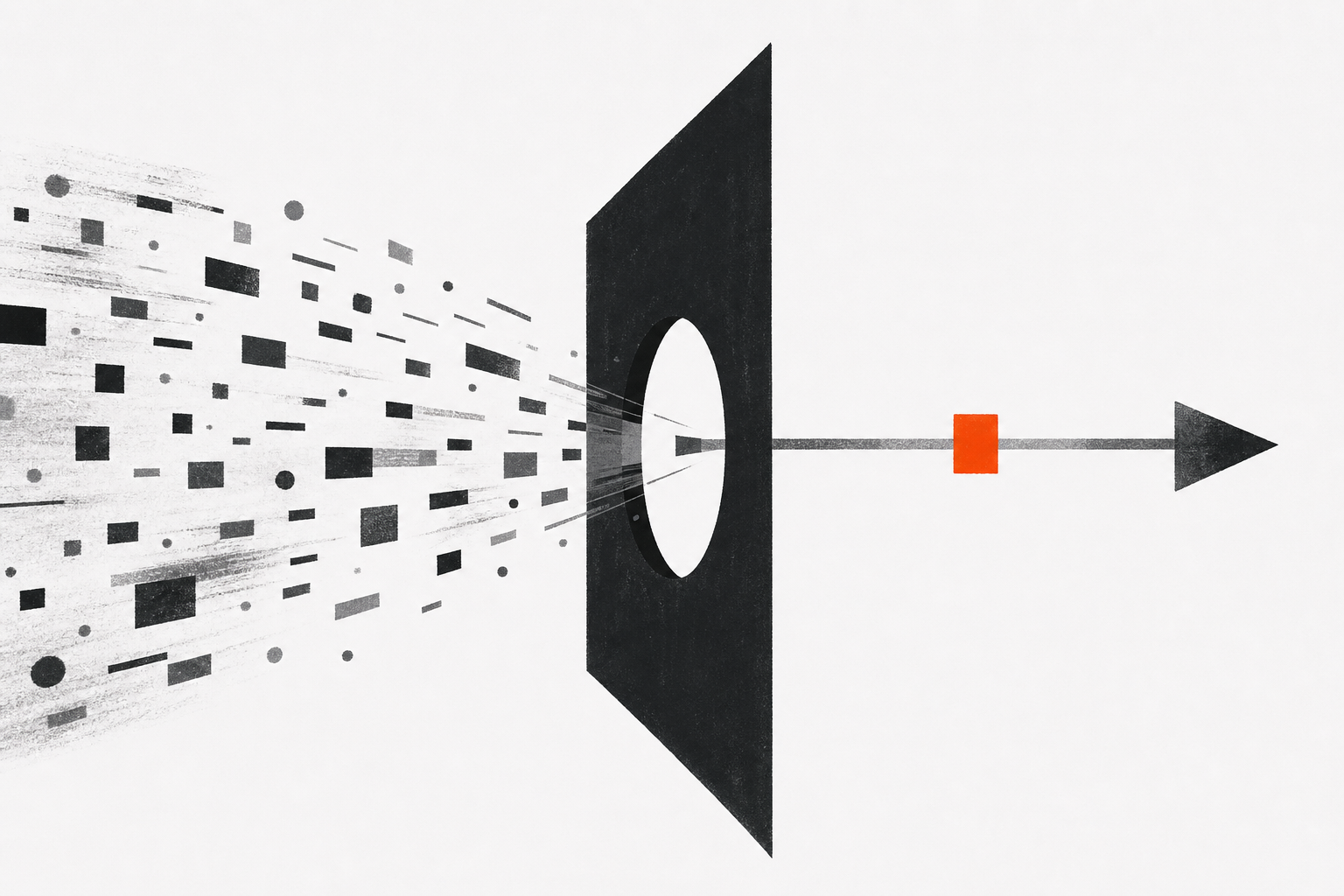
Every survey says small businesses love AI. Almost none of them can tell you what it returned.
That gap is the whole problem. You buy or build an AI tool, it feels useful, your team says it saves time, and six months later you still can’t answer a simple question: did it actually work? Not “do we use it.” Did it produce something you can point to.
Here’s a test for that, and how to run it on your own tools before you decide whether the thing you bought is working or just busy.
The gap the surveys keep hiding
Adoption is real and rising. The US Census Bureau’s Business Trends and Outlook Survey put operational AI use at roughly 18% of firms in early 2026, up from 4.6% two years earlier. Among the smallest businesses it’s a little under 20%. So about one in five is actually running AI in a business function, not just experimenting.
Sentiment is even higher. Goldman Sachs surveyed small business owners in early 2026 and found 76% report using AI, and 93% of those users say it’s had a positive impact. Sounds settled.
Then the same survey drops the number that matters: only 14% have fully integrated AI into core operations. People feel good about tools that are still sitting at the edge of the workflow.
When researchers look for money instead of feelings, it gets worse. MIT’s Project NANDA studied more than 300 enterprise deployments for its 2025 report, “The GenAI Divide,” and found that 95% of generative AI pilots produced no measurable return. Five percent worked. Their explanation wasn’t weak models. It was what they called the learning gap: tools that don’t retain feedback, don’t adapt to context, and don’t fit how work actually happens.
Put those three numbers next to each other and you’ve got the real state of AI at work. Almost everyone feels it helps. A seventh have it wired into operations. A twentieth can prove it paid. “We use AI” and “AI worked” are different sentences.
A three-question test for whether an agent actually worked
You don’t need an ROI model to close that gap. You need three questions, and the agent has to pass all three.
First: did it take real hours off a specific person? Not “could save time” in the abstract. Name the person and the task. If your ops lead used to spend forty minutes prepping each call and now spends five, that’s a yes. If nobody’s week changed, it’s a no, no matter how sharp the output looks.
Second: did it change a real decision or action? Something has to happen differently because the agent ran. A deal got framed differently, a follow-up went out that would’ve slipped, a lead got dropped that you’d have wasted a week chasing. An output that gets generated and ignored isn’t a result. It’s a log.
Third: is it still running a few weeks later without you driving it? This is the one that separates a demo from a system. Most pilots pass week one on enthusiasm and quietly die by week four, when the person has to remember to trigger it, check it, and fix it. If you’re still hand-running it, it isn’t automation. It’s a chore with a wrapper.
Pass all three and the agent worked. Miss one and the honest verdict is “unproven,” which isn’t the same as “failed” but is definitely not “worked.” Unproven should be your default until an agent earns its way out. That’s the discipline the 95% skipped.
Run the test on your own stack this week
This works better as an audit than a theory, so point it at something you already have. Pick one agent, one person, and one task. Then work the three questions in order, because a no on any of them ends the test.
Start with the person, not the tool. Go to whoever the agent was supposed to help and ask what changed in their week. If they can name a task they’ve stopped doing, write down the hours. If they hedge or say it’s “nice to have,” you have your answer on question one, and the demo that sold you was measuring the wrong thing.
Then look for one decision. Open the last month of records and find a single case where something happened differently because the agent ran: a deal worked because of what it surfaced, a follow-up that would’ve been forgotten, a lead correctly killed. One real instance is enough to pass. Zero, across a month, means the output is being generated and scrolled past.
Question three is the one to be honest about, because it’s the one that fails quietly. Check whether the agent ran last week without anyone pressing a button. Not whether it can run. Whether it did, unattended, while everyone was busy with something else. This is where most tools come apart, and the reason is boring: someone has to trigger it, glance at it, and fix the edge cases, and that someone has a real job. The agent doesn’t die in a crash. It dies the first week nobody has time for it.
| The question | Looks like a pass | Looks like unproven |
|---|---|---|
| Hours off a named person | Their week visibly changed | Nobody can point to saved time |
| Changed a decision or action | One real decision came out differently | Output gets generated and ignored |
| Still running unattended | It ran last week with nobody driving it | You still trigger it by hand |
I build these agents, so I’ll say where the wall actually is. Getting a clean demo is the easy part now. A capable model and an afternoon will produce something that looks finished and tests well on a handful of examples. Getting that same agent to run unattended inside a real workflow, week after week, without a person babysitting it, is a different and much longer job. That’s the part no demo shows you, and it’s exactly the part the three-question test is built to catch.
Why question three is the one that fails most pilots
Notice which question does the damage. It usually isn’t quality. Modern agents produce good output when they run. It’s the third question, every time, because “still running unattended in week six” is a bar that quality alone can’t clear.
That’s the learning gap MIT named, in plain terms. Building an agent that produces a good result once is easy now. Getting it wired into the workflow so it keeps producing without a human holding it up is the entire job, and it’s the part that takes weeks to prove and nobody demos. A tool that sits at the edge of the workflow, which is where most small businesses still have theirs given that only 14% have fully integrated it, is a tool that depends on someone remembering to use it. That dependency is what the return leaks out of.
So here’s the stance. Judge an agent in week six, not at the launch. Pick the one person whose hours you want back and watch whether their week actually changed. Treat any agent you’re still hand-triggering as unfinished, not done. And be suspicious of any AI you feel good about but can’t connect to a decision that came out differently. The good feeling is the 93%. The changed decision is the 5%.
The uncomfortable version: if you can’t run this test on your tools today and come back with a clear yes, you don’t have working AI yet. You have a pilot. The difference is whether it’s still running when you stop looking.
Frequently asked questions
What is the difference between AI adoption and AI actually working?
Adoption means someone is using the tool. Working means it took real hours off a named person, changed a decision or action, and keeps running without you driving it. Surveys show high adoption and high satisfaction, but far fewer businesses can point to a measured return. Usage is not proof.
Why do most AI pilots fail to show a return?
MIT’s 2025 NANDA research found 95% of enterprise generative AI pilots produced no measurable return, and blamed the learning gap: tools that do not fit the workflow, do not retain feedback, and do not improve. In practice most pilots pass the demo and then stall because they need a person to keep triggering and fixing them, so they quietly stop.
How long should I wait before judging an AI agent?
About six weeks. Week one is enthusiasm and everything looks good. The real signal is whether the agent is still running unattended in week five or six and whether the person it was built for has actually changed how they spend their time. If you are still hand-running it, it is not done.
What is a simple way to measure if an AI sales tool worked?
Ask three questions. Did it take real hours off a specific person? Did it change a real decision or action? Is it still running a few weeks later without you driving it? Pass all three and it worked. Miss one and it is unproven, which is your honest default until it earns its way out.
Is it worth automating sales tasks for a small team?
Yes, if you pick one painful, repeated task and hold it to the test. The teams that get returns integrate the agent into the daily workflow rather than leaving it at the edge. Goldman Sachs found only 14% of small businesses have fully integrated AI into core operations, which is roughly the share actually getting paid back.
— Stuart, Hotkey

Why Clients Go Quiet After You Send a Quote (And What Actually Gets a Reply)
Buyers open 80% of the proposals they reject. Silence isn't an oversight, so a follow-up cadence won't fix it. Here's what actually gets a reply.

ChatGPT Work vs Claude Cowork: Which One Your Sales Team Should Actually Get
Both run scheduled work in the cloud. The real differences sit in the fine print, and they matter less than which tool your reps will actually open.

The Best CRM for a Small Team With No Ops Person Is the One That Fills Itself In
Pick a CRM by how many fields fill themselves in, not by feature count. Across four vendors, that layer starts 2.3x to 2.8x above the entry price.